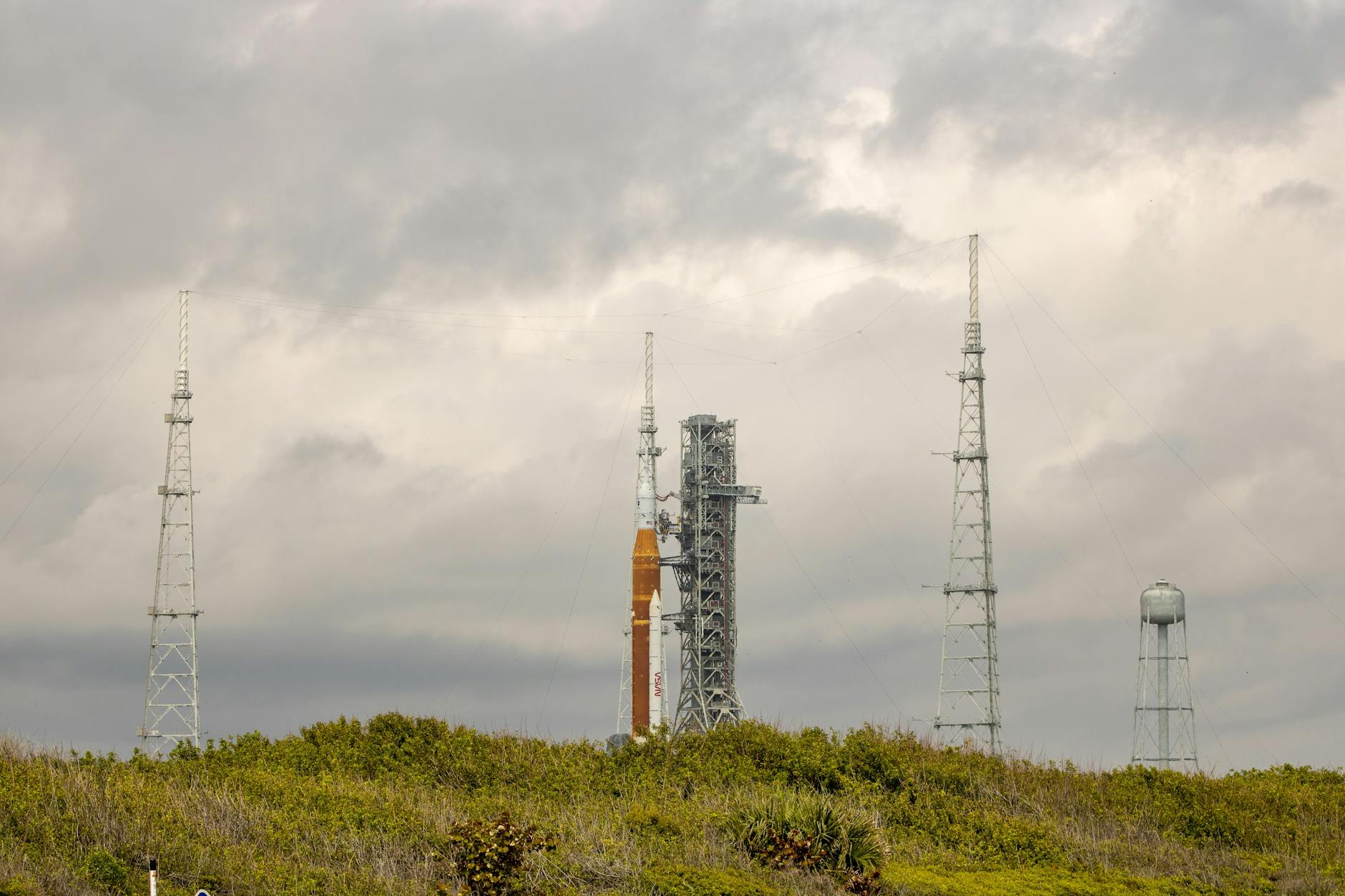
Breaking: Mission Status Update
Artemis II launches August 12, 2026, with splashdown scheduled for November 22, 2026. The 102-day mission timeline includes 8 days in lunar vicinity and marks humanity's return to deep space exploration after a 54-year hiatus.
Mission Overview & Timeline {#mission-overview}
The Artemis II mission represents a carefully orchestrated dance between cutting-edge technology and human courage. According to Reuters, NASA has invested over $93 billion in the Artemis program, making this the most expensive space exploration initiative since Apollo. Launch occurs during a precise 42-minute window on August 12, 2026, at 11:47 AM EDT. The Space Launch System (SLS) rocket, standing 322 feet tall and weighing 5.75 million pounds when fully fueled, will propel the crew toward the Moon at 25,000 mph—faster than any human has traveled since 1972. The mission timeline unfolds across three critical phases: Earth Departure Phase (Days 1-3)- Launch and Earth orbit checkout
- Trans-lunar injection burn
- Initial systems verification
- Lunar approach and flyby at 80 miles altitude
- Far-side communication blackout period
- Deep space navigation tests
- Trans-earth injection
- Atmospheric re-entry at 25,000 mph
- Pacific Ocean splashdown near San Diego
Complete Crew Profiles {#crew-profiles}
The four-person crew brings together 40+ years of combined space experience, representing the most diverse deep space crew in history. Commander Reid Wiseman leads the mission with characteristic calm precision. The 51-year-old former naval aviator commanded the International Space Station in 2014 and brings 165 days of spaceflight experience. His leadership during ISS emergencies earned him the nickname "Cool Hand Reid" among NASA flight controllers. Pilot Christina Hammock Koch makes history as the first woman to fly around the Moon. The 47-year-old electrical engineer holds the record for the longest single spaceflight by a woman—328 days aboard the ISS. Her expertise in life support systems proves crucial for the 10-day mission without any possibility of emergency return to Earth. Mission Specialist Victor Glover becomes the first African American to leave Earth orbit. The 50-year-old test pilot and engineer spent 168 days on the ISS as part of Crew-1. His background in spacecraft systems and EVA operations provides technical depth for the mission's complex objectives. Mission Specialist Jeremy Hansen represents international partnership as the first Canadian to venture beyond Earth orbit. The 47-year-old former fighter pilot brings unique perspectives on crew resource management and serves as the mission's payload specialist. Each crew member underwent 18 months of intensive training, including underwater EVA simulations, centrifuge runs up to 11 G-forces, and survival training in remote locations. They've practiced every emergency scenario from cabin fires to life support failures, knowing that unlike ISS missions, no rescue is possible once they leave Earth orbit.Lunar Trajectory & Return Journey {#flight-path}
Artemis II follows a free-return trajectory that naturally brings the spacecraft home even if all propulsion systems fail—a critical safety feature learned from Apollo 13's near-disaster. The flight path traces a figure-eight loop around the Moon, providing optimal views of both lunar hemispheres while minimizing fuel requirements. The spacecraft approaches the Moon from its trailing edge, swinging around the far side at a minimum altitude of 80 miles above the surface. This trajectory offers unprecedented views of lunar craters and mountain ranges that no human eyes have seen since Apollo 17 commander Gene Cernan looked back in December 1972. During the lunar flyby, the crew experiences several firsts:- First humans to see Earth and Moon in the same frame since Apollo
- First crew to photograph lunar far-side features with modern cameras
- First deep space test of next-generation life support systems
- First navigation using NASA's Deep Space Network upgrades
Critical Mission Objectives {#key-objectives}
Artemis II serves multiple purposes beyond the symbolic return to deep space. NASA has identified 17 primary mission objectives, each critical for future lunar landing missions. Life Support Validation tops the priority list. The Environmental Control and Life Support System (ECLSS) must function flawlessly for 10 days without any possibility of resupply or repair. Unlike ISS missions where backup systems exist on the station, Artemis II tests whether four humans can survive entirely on spacecraft resources. Navigation System Testing validates the new Deep Space Navigation system using GPS-like satellites around the Moon. Future Artemis III crews will rely on this technology to land precisely at the lunar south pole, where permanently shadowed craters may contain water ice worth billions of dollars. Radiation Exposure Monitoring measures cosmic ray exposure using new protective materials. The crew wears dosimeter badges and operates radiation detection equipment to understand health risks for future Mars missions lasting 2-3 years. Spacecraft Performance evaluation covers everything from toilet functionality in deep space to communication system reliability during lunar far-side blackouts. Engineers need real-world data on how systems perform in the deep space environment's temperature extremes and radiation levels. The mission also tests emergency procedures that could save future crews. Scenarios include cabin pressure loss, communication failures, and medical emergencies occurring days away from any possible rescue.Artemis II Mission Overview
| Mission Name | Artemis II |
| Launch Date | August 12, 2026 |
| Return Date | November 22, 2026 |
| Duration | 102 days |
| Crew Size | 4 astronauts |
| Maximum Distance | 280,000 miles from Earth |
| Spacecraft | Orion Multi-Purpose Crew Vehicle |
| Launch Vehicle | Space Launch System (SLS) |
Apollo vs Artemis Comparison {#apollo-comparison}
The technological gap between Apollo and Artemis resembles comparing a 1969 Mustang to a 2026 Tesla. While Apollo crews navigated using sextants and slide rules, Artemis II astronauts have touchscreen displays with more computing power than mission control possessed in 1969. Spacecraft Size: Orion's crew compartment offers 316 cubic feet compared to Apollo's 218 cubic feet. The extra space allows crew members to float freely rather than remaining strapped in seats for the entire mission. Artemis astronauts can exercise, prepare meals, and sleep in individual sleeping bags—luxuries impossible in Apollo's cramped quarters. Mission Duration: Apollo lunar missions lasted 8-12 days maximum. Artemis II extends to 10 days, testing life support systems for the endurance required by future Mars missions. The longer duration validates psychological factors and crew dynamics for extended deep space operations. Safety Systems: Apollo used a launch escape system that could only function during the first few minutes of flight. Orion's abort system can activate throughout the entire launch and early orbital phases, providing escape options until trans-lunar injection. Communication: Apollo crews faced complete communication blackouts behind the Moon. Artemis II maintains contact through relay satellites and upgraded Deep Space Network antennas, reducing blackout periods from hours to minutes. The most striking difference involves diversity and international cooperation. Apollo crews consisted entirely of white American males, while Artemis II includes the first woman, first African American, and first Canadian to leave Earth orbit—reflecting how space exploration has evolved into a global, inclusive endeavor.Live Mission Tracking Resources {#tracking-resources}
Space enthusiasts can follow every moment of Artemis II through multiple tracking platforms offering unprecedented access to mission data. NASA's Artemis Real-time Tracker provides live spacecraft position, crew biometrics, and communication transcripts. The interactive map shows Orion's location relative to Earth and Moon, with predicted visibility windows for ground-based telescopes. Deep Space Network Dashboard displays which antenna stations communicate with the crew. Visitors can see signal strength, data transmission rates, and even listen to air-to-ground conversations during public communication periods. Social Media Integration allows crew members to post photos and videos directly from Orion using SpaceX Starlink connectivity during Earth-facing portions of the mission. Christina Koch plans to livestream Earth views during the trans-lunar coast, while Victor Glover will document the crew's daily routines. Amateur Radio Tracking enables ham radio operators worldwide to monitor crew communications using published frequencies and schedules. Several universities plan to coordinate student projects tracking Orion's radio signals as it travels to the Moon. The mission includes planned public events:- Live lunar approach broadcast (Day 4)
- Far-side photography session (Day 5)
- Earth-rise video streaming (Day 6)
- Crew press conference from deep space (Day 7)
Top 8 Artemis II Return 2026 Highlights {#top-highlights}
First Woman Around the Moon
Christina Koch becomes the first woman to leave Earth orbit, inspiring a generation of young women to pursue STEM careers. Her 328-day ISS record proves women excel in long-duration spaceflight.
Most Diverse Deep Space Crew
The four-person crew represents unprecedented diversity with the first African American and first Canadian to venture beyond Earth orbit, marking space exploration's evolution into a truly global endeavor.
54-Year Deep Space Return
Humanity's first crewed mission beyond Earth orbit since Apollo 17 in 1972, ending the longest gap in deep space exploration and reigniting public interest in lunar missions.
Advanced Spacecraft Technology
Orion features touchscreen controls, improved life support systems, and abort capabilities throughout launch—representing quantum leaps beyond Apollo-era technology.
Live Social Media From Deep Space
First crew to post real-time photos and videos from lunar vicinity using advanced communication systems, sharing the Moon experience directly with global audiences.
Extended Mission Duration
10-day mission tests crew endurance and spacecraft systems for future Mars missions, validating technologies for journeys lasting months or years.
Far-Side Lunar Photography
Modern cameras capture detailed images of lunar far-side features unseen by human eyes since 1972, providing scientific data for future landing site selection.
International Partnership Success
Canadian astronaut Jeremy Hansen represents expanded international cooperation, demonstrating how space exploration unites nations in peaceful scientific endeavors.
"This mission carries the dreams of everyone who looked up at the Moon as a child and wondered when humans would return. We're not just flying around the Moon—we're proving that the next chapter of human space exploration has begun." — Christina Hammock Koch, Artemis II Mission SpecialistThe mission's success enables Artemis III to attempt the first lunar landing since 1972, targeting the Moon's south pole where permanently shadowed craters may contain billions of tons of water ice. This resource could fuel future Mars missions and establish permanent lunar bases, transforming humanity into a truly spacefaring civilization. Beyond the technical achievements, Artemis II carries profound symbolic meaning. The diverse crew demonstrates that space exploration no longer belongs exclusively to any single nation or demographic group. Young women watching Christina Koch float in zero gravity will see new possibilities for their own futures. International cooperation through Jeremy Hansen's participation proves that peaceful collaboration can achieve what no single country accomplished alone. The mission also validates commercial partnerships that make Artemis possible. SpaceX provides communication systems, while dozens of companies contribute everything from life support components to navigation software. This distributed approach contrasts with Apollo's government-dominated structure, showing how public-private partnerships can accelerate space exploration.