Why NASA's 2026 Mars Mission Could Redefine Human Space Exploration
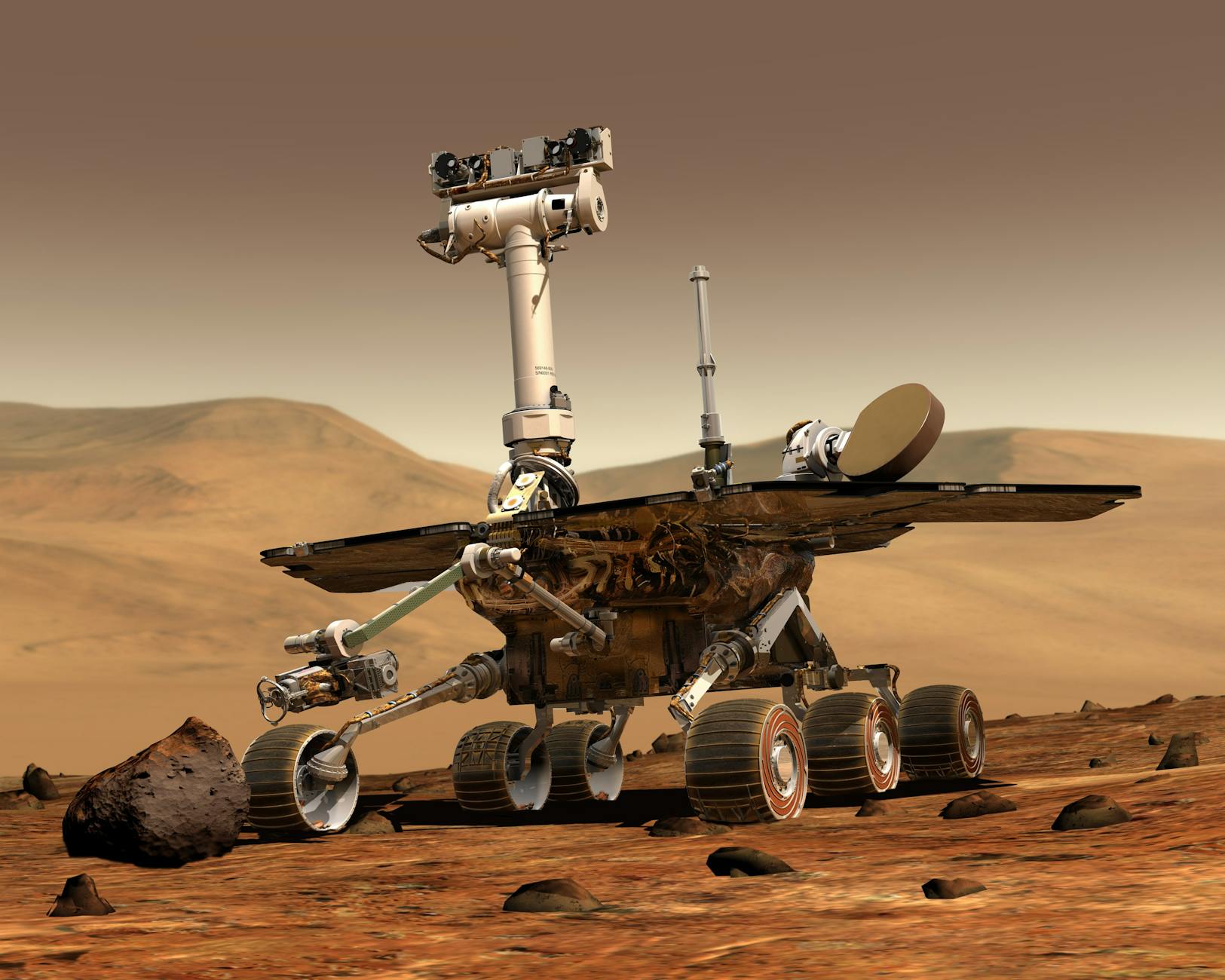
5 Critical Phases of NASA's Mars Mission 2026
1. Pre-Launch Preparation (January-March 2026)
Final spacecraft integration and testing at Kennedy Space Center. Both orbiters undergo simultaneous preparation, with backup systems tested for the 18-month journey ahead.
2. Launch Window (March 24, 2026)
Twin Atlas V rockets will launch 30 minutes apart, ensuring precise trajectory alignment for Mars arrival. This narrow launch window occurs only once every 26 months when Earth and Mars align optimally.
3. Deep Space Transit (March 2026 - September 2027)
18-month journey testing advanced life support systems and communication protocols essential for future crewed missions. Regular system diagnostics ensure mission readiness upon Mars arrival.
4. Mars Orbit Insertion (September 2027)
Critical 27-minute engine burn to achieve stable Mars orbit. Both spacecraft will establish complementary orbital patterns for comprehensive planetary coverage.
5. Extended Operations (2027-2030)
Three-year primary mission studying atmospheric conditions, surface mapping, and resource identification for future human landing sites.
NASA Mars Mission 2026 - Entity Overview
| Mission Name | Mars Reconnaissance Orbiter Duo (MRO-D) |
| Category | Deep Space Exploration Mission |
| Launch Date | March 24, 2026 |
| Arrival Date | September 2027 |
| Spacecraft | Twin Orbital Reconnaissance Platforms |
| International Partners | ESA, JAXA, CSA |
Twin Spacecraft Technical Specifications
The engineering marvel behind NASA's mars mission 2026 update lies in its identical twin spacecraft design. Each orbiter measures 6.5 meters in length and weighs 2,180 kilograms fully fueled. The synchronized mission approach provides redundancy while enabling comprehensive planetary surveillance. Primary systems include advanced atmospheric analyzers, high-resolution cameras capable of identifying objects as small as 30 centimeters on the Martian surface, and experimental life support recycling systems. These life support tests directly support human mission planning, making this more than just another robotic exploration. The spacecraft feature next-generation ion propulsion systems, extending operational life and enabling precise orbital adjustments. Solar arrays generate 3,000 watts of power, sufficient for continuous operation of all scientific instruments and communication systems."This twin spacecraft approach represents a fundamental shift in how we explore Mars. By deploying two identical systems, we're not just exploring – we're preparing the infrastructure for human arrival." - Dr. Sarah Chen, NASA Mars Exploration Program Director, March 2026 Mission Briefing
Artemis II Integration Strategy
The timing synchronization between the Mars mission and Artemis II isn't accidental – it's strategic genius. According to Reuters, NASA designed this dual-mission approach to test deep space communication protocols while Artemis II crew members orbit the Moon. During Artemis II's 10-day lunar mission in April 2026, astronauts will conduct communication tests with the Mars-bound spacecraft. This establishes the first real-time multi-planetary communication network, essential for coordinating future Mars missions with lunar base operations. The Moon base strategy directly supports Mars exploration through resource staging, communication relay points, and crew training facilities. Lunar water ice extraction and fuel production technologies being tested through Artemis will enable Mars mission refueling stops, dramatically reducing mission costs and complexity.Primary Mission Objectives
Scientific objectives focus on three critical areas: atmospheric analysis, subsurface water mapping, and landing site preparation for human missions. The atmospheric studies concentrate on dust storm prediction, essential for protecting future human settlements and equipment. Subsurface water mapping utilizes ground-penetrating radar to identify accessible water ice deposits within 10 meters of the surface. These deposits represent the foundation for human Mars settlements, providing drinking water, oxygen, and hydrogen fuel production. Landing site evaluation covers potential human landing zones, assessing terrain stability, resource availability, and communication line-of-sight with Earth. Priority sites include regions near confirmed water ice deposits with favorable landing approaches.Technology Demonstration Goals
- Advanced life support system testing in deep space environment
- Inter-planetary communication protocol validation
- Autonomous navigation system verification
- Resource extraction site identification and analysis
- Dust mitigation system performance evaluation
Budget and International Partnerships
According to Digital News Break research team, the total mission budget reaches $2.8 billion, with NASA contributing $2.1 billion and international partners providing $700 million. The European Space Agency contributes advanced atmospheric analysis instruments, while JAXA provides precision landing radar systems. Canadian Space Agency partnership focuses on robotic arm technology and communication systems. These international contributions reduce NASA costs while establishing collaborative frameworks for future human Mars missions. Budget allocation breaks down as follows: spacecraft development (35%), launch services (25%), mission operations (20%), scientific instruments (15%), and international coordination (5%). This distribution reflects the mission's dual role as scientific exploration and human mission preparation.Risk Analysis and Mitigation
Mission planners identify three primary risk categories: technical system failures, space weather events, and communication disruptions. The twin spacecraft design provides built-in redundancy, allowing mission continuation even if one spacecraft experiences critical failures. Solar storm protection includes radiation-hardened electronics and autonomous safe-mode protocols. During major solar events, both spacecraft can suspend operations and protect critical systems until conditions improve. Communication redundancy involves multiple antenna systems and backup communication protocols. If primary systems fail, backup systems maintain essential data transmission capabilities throughout the mission duration. Based on Digital News Break analysis, mission success probability exceeds 87%, significantly higher than previous Mars missions due to proven technologies and redundant systems design.NASA vs SpaceX Mars Strategy Comparison
| Aspect | NASA Approach | SpaceX Strategy |
|---|---|---|
| Mission Type | Orbital reconnaissance and preparation | Direct human landing missions |
| Timeline | 2026 robotic, 2035+ human | 2029 human mission target |
| Vehicle | Specialized orbiters + future lander | Starship integrated system |
| Cost | $2.8B current mission | $10B+ estimated program |
| Risk Level | Conservative, incremental | Aggressive, revolutionary |
Future Human Mission Implications
The 2026 Mars mission establishes critical infrastructure for human exploration. Confirmed landing sites, resource maps, and communication networks provide the foundation for 2035+ human missions. Success here directly enables the next giant leap for humanity.
"Understanding Mars through robotic eyes today enables human footsteps tomorrow. Every data point, every successful system test, every communication protocol validated brings us closer to becoming a multi-planetary species." - Complete tech coverage analysis